
Why Community Health Matters
When our neighbors have access to care, support for mental health, and the tools to manage chronic conditions, our whole community grows stronger. The priorities in our plan reflect what we heard from local voices and data, and they are focused on the areas where we can make the biggest difference for today’s families and the next generation.
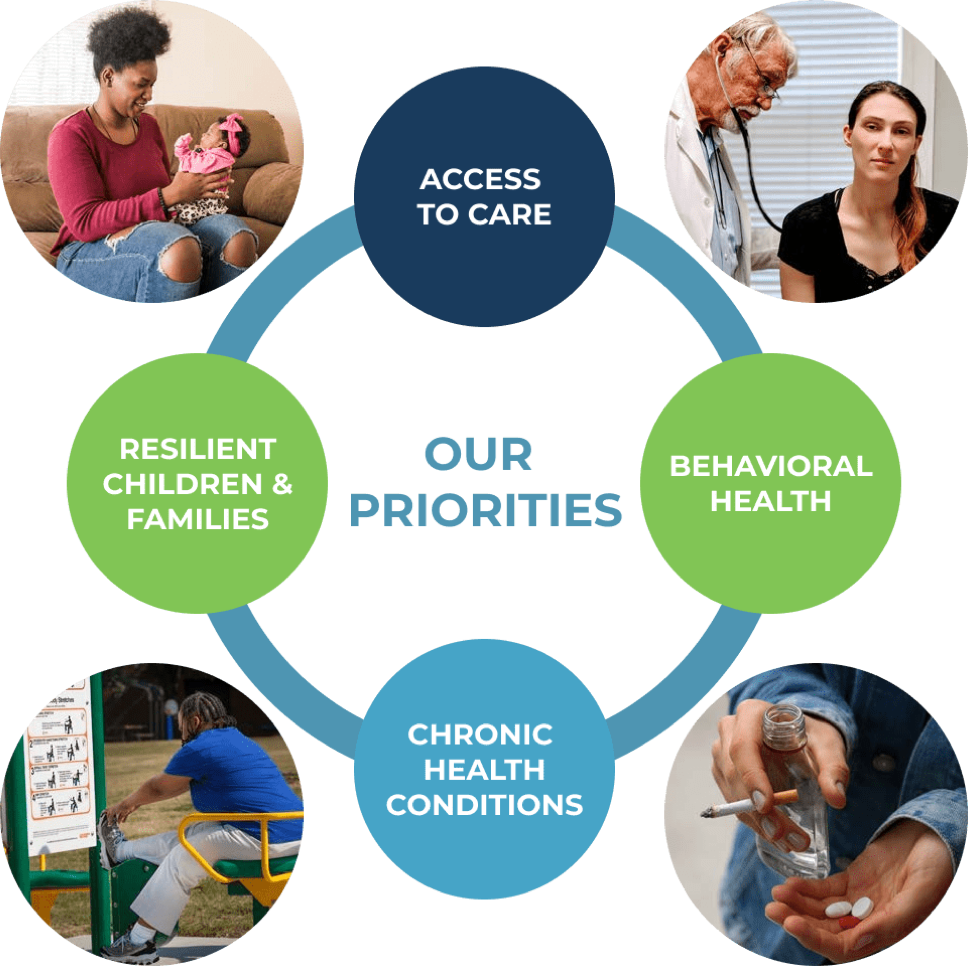
Access to Care
Everyone deserves access to quality and affordable health care services. Live Healthy Union believes increasing access and removing barriers to care are essential to improving health outcomes for Union County residents.
INDICATOR #1
Health Insurance Status
Percentage of adults with health insurance coverage, under the age of 65.
INDICATOR #2
Provider Ratios
Primary Care, OBGYN, Pediatric, Dental, and Mental Health providers per number of residents.
INDICATOR #3
Avoidable Emergency Department Utilization
Rate of avoidable emergency department visits per 100,000 population.
INDICATOR #4
Early & Adequate Prenatal Care
The timing of the first prenatal visit and the number of follow-up visits throughout pregnancy.
What’s our approach?
Following the identification of the Access to Care indicators, our team discussed local strategies that could be led by our community partners. Performance Measures were also identified and will be tracked by those local partners.
Behavioral Health
Access to mental health and substance use services is essential for overall well-being. Live Healthy Union believes in strengthening behavioral health resources and ensure every resident can access the supports they need.
INDICATOR #1
Mental Health Distress
Percentage of adults reporting being in poor mental health 14+ days per month.
INDICATOR #2
Emergency Department Visits
Rate of emergency department visits related to mental and behavioral health.
INDICATOR #3
Drug Overdose
Rate of Union County residents who died by overdose.
INDICATOR #4
Suicide
Rate of Union County residents who died by suicide.
What’s our approach?
Following the identification of the Behavioral Health indicators, our team discussed local strategies that could be led by our community partners. Performance Measures were also identified and will be tracked by those local partners.
Chronic Health Conditions
We believe that addressing chronic health conditions such as diabetes and hypertension includes preventative approaches such as supporting and developing opportunities that increase access to healthy foods and safe places for physical activity.
INDICATOR #1
Food Insecurity
Percentage of residents experiencing food insecurity.
INDICATOR #2
Limited Access to Healthy Foods
Percentage of low- income residents living in low-access census tracts.
INDICATOR #3
Fruit & Vegetable Consumption
Percentage of adults eating less than one serving of fruits and vegetables per day.
INDICATOR #4
Adult Physical Inactivity
Percentage of adults reporting no physical activity outside of work.
INDICATOR #5
Access to Opportunities for Physical Activity
Percentage of residents living close to a park or recreation facility.
What’s our approach?
Following the identification of the Chronic Health Conditions indicators, our team discussed local strategies that could be led by our community partners. Performance Measures were also identified and will be tracked by those local partners.
Resilient Children & Families
Resiliency is possible when there is access to support, resources, and environments that allow children and families to be healthy, safe, and prepared for lifelong success.
INDICATOR #1
Kindergarten Readiness
Percentage of students demonstrating readiness to learn.
INDICATOR #2
Third Grade Literacy
Percentage of third graders testing below standards in English / Language Arts.
INDICATOR #3
Abuse & Neglect
Number of children referred for investigation of maltreatment for abandonment, including all types of abuse & neglect.
INDICATOR #4
Adverse Childhood Experiences (ACES)
Percentage of adults that self-report childhood ACES.
INDICATOR #5
Asset Limited, Income Constrained (ALICE)
Percentage of households that earn more than the Federal Poverty Level, but less than the basic cost of living.
What’s our approach?
Following the identification of the Resilient Children & Families indicators, our team discussed local strategies that could be led by our community partners. Performance Measures were also identified and will be tracked by those local partners.
Learn More About Our Resilient Children & Families Strategies
Have questions about the improvement areas?
Both our Community Health Improvement Plan and Community Health Needs Assessment are available for everyone to read. If you have more questions, reach out to us to learn more.